
Top Reusable Respirators Manufacturer Highlights Integrated PPE and Workwear Solutions
ANQING, ANHUI, CHINA, October 29, 2026 /EINPresswire.com/ -- Anhui Wankang Protective Products Co., Ltd. is part of
Press Release Disclaimer: This is a press release distributed through the XPR Media network. It has not been independently verified by our newsroom.
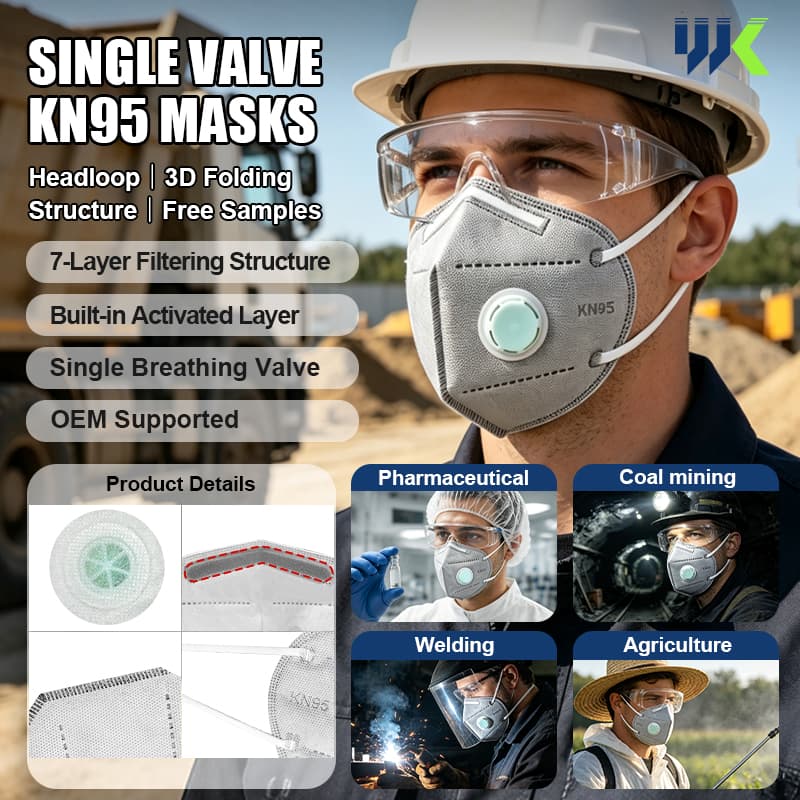

ANQING, ANHUI, CHINA, October 29, 2026 /EINPresswire.com/ —
Anhui Wankang Protective Products Co., Ltd. is part of China’s personal protective equipment (PPE) manufacturing sector, serving buyers looking for workplace safety products and practical sourcing options. As companies across construction, manufacturing, logistics, maintenance, and other industries review their protective equipment requirements, interest continues in suppliers that can support multiple product categories. Although respiratory protection remains an important part of occupational safety, purchasing teams also need to consider protective clothing and complementary equipment. The company’s publicly available product information covers respiratory protection, workwear, and other PPE categories, reflecting the broad range of products that organizations may source when building workplace safety programs.
The search for a reusable respirator manufacturer is often connected to a wider procurement process. Employers need to identify equipment appropriate to the hazards workers may encounter, while distributors seek product lines that can serve different customer groups. Respirators, protective clothing, gloves, safety footwear, helmets, and hearing protection address different risks and are not interchangeable. For buyers, a supplier with a broad PPE portfolio may simplify communication and sourcing, provided that each product is assessed against the relevant technical requirements and safety standards.
Anhui Wankang Protective Products Co., Ltd. presents itself as a manufacturer and exporter specializing in personal protective equipment. Its company website describes a range that includes masks, safety gloves, safety shoes, safety helmets, dust masks, earmuffs, and protective clothing. The company also states that it offers product customization and sample-related services for business customers. These capabilities are relevant to distributors and organizations seeking to coordinate several types of workplace protection through one supplier relationship. Company information and product specifications should nevertheless be checked directly with the supplier before purchasing, particularly when equipment is intended for regulated or high-risk working environments.
Respiratory protection is an important part of occupational safety because airborne hazards differ considerably between workplaces. Dust, particles, fumes, aerosols, and certain gases or vapors may require different protective approaches. The appropriate equipment depends on the hazard assessment, exposure conditions, applicable regulations, and the protection level required. A reusable respirator is not automatically suitable for every airborne hazard, and a general-purpose mask should not be assumed to provide the same protection as a properly selected and fitted respirator.
For buyers evaluating reusable respiratory equipment, product selection involves more than comparing appearance or unit price. Relevant questions include the intended application, compatible filters or cartridges, fit and sizing options, cleaning and maintenance procedures, replacement-part availability, and applicable certification. Employers should also consider worker training, fit testing where required, inspection procedures, and the conditions under which equipment must be replaced. These factors help ensure that respiratory protection is selected as part of a complete safety program rather than treated as an isolated purchase.
A manufacturer or supplier can support this process by providing clear product documentation. Buyers may request model-specific information on intended use, compatible components, limitations, care instructions, and applicable test reports. Where respirators are required for occupational use, procurement teams should verify that the exact model and configuration meet the standards applicable in the destination market. Certifications should be checked against the product model and supporting documents, rather than inferred from a company’s general claims about its wider product range.
Workwear represents another significant area of workplace protection. In industrial and commercial settings, clothing may need to withstand repeated use, routine washing, movement, and contact with tools or equipment. The design of a garment can influence comfort, mobility, storage, visibility, and suitability for the work environment. Depending on the job, buyers may need standard work suits, coveralls, high-visibility garments, flame-resistant clothing, or anti-static workwear. Each type serves a different purpose, and product selection should reflect the actual workplace risks.
Anhui Wankang Protective Products Co., Ltd. lists workwear-related products among its offerings. Its published product information includes workwear suits, coveralls, reflective work clothing, and other protective garments. The company also describes customization options for business customers. For distributors and organizations managing branded uniforms, customization may involve garment style, color, sizing, logos, and other specifications, subject to the supplier’s available production options. Buyers should confirm the available materials, size range, minimum order quantities, sample process, and production lead time before finalizing an order.
The company’s product category Professional Workwear is relevant to organizations that need clothing for employees working in practical, task-oriented environments. Professional workwear can support a consistent appearance across a workforce, while design details such as pockets, closures, reflective elements, and fabric construction may affect daily usability. However, a work garment should not be assumed to provide specialized protection simply because it is marketed as workwear. For applications involving heat, flame, static electricity, chemicals, or low-light conditions, buyers should verify the garment’s intended protective function and the standards or test documentation applicable to that use.
Customization can also play a role in workwear procurement. Companies may want garments that carry a logo, use consistent brand colors, or align with an existing uniform policy. For larger orders, sample approval can help buyers assess fit, construction, fabric feel, and placement of design elements before bulk production. Clear specifications are particularly useful when garments will be reordered, since documenting the approved design and materials can help reduce differences between batches. The exact customization options available from a supplier should be confirmed for each product category and order.
Beyond clothing and respiratory equipment, many workplace safety programs require a mix of complementary protective products. Anhui Wankang Protective Products Co., Ltd. uses the category Other PPE for additional personal protective equipment. Its broader public product information refers to products such as safety gloves, footwear, helmets, and hearing protection. Such categories can be relevant to distributors serving customers across multiple industries, although each item must be evaluated independently according to the hazards it is intended to address.
The selection of other PPE begins with understanding the task and exposure. Gloves, for example, may be designed for different levels of grip, abrasion resistance, cut resistance, or contact with particular substances. Safety footwear can vary in its toe protection, slip resistance, puncture resistance, and suitability for specific work surfaces. Helmets and hearing protection also have their own performance requirements. A broad catalogue may help buyers explore options, but it does not replace a risk assessment or the need to confirm that the selected model is appropriate for the intended use.
For distributors, the ability to source multiple categories from one supplier may offer operational advantages. Consolidated communication can make it easier to discuss product specifications, packaging, samples, and delivery arrangements. It may also reduce the number of supplier relationships required to assemble a general PPE catalogue. At the same time, buyers should maintain clear product-level records, since different equipment types may be subject to different technical standards, labeling requirements, and import rules. A supplier’s broad portfolio should be considered alongside documentation quality, product availability, and the suitability of each individual item.
Quality assurance is central to PPE procurement. Product appearance alone cannot establish whether an item meets its stated protective purpose. Buyers may request technical data sheets, declarations of conformity, test reports, certificates, and information about inspection procedures. The documentation required will depend on the product type and destination market. It is also important to confirm that the documents correspond to the exact model being purchased and remain valid for the relevant product configuration.
Anhui Wankang Protective Products Co., Ltd. states on its public website that its products have obtained CE and AS/NZS-related certifications and references an ISO 9001:2000 certification claim. These are company-reported statements and should be verified against current certificates and product-specific records. Different products may be governed by different standards, and a company-level certification does not by itself establish that every item in its catalogue is suitable for every workplace or jurisdiction. Buyers should confirm the relevant requirements before placing orders, especially for respiratory protection and other equipment used in higher-risk environments.
The supplier also describes services that include product customization and sample processing. These services can be useful when buyers need to evaluate an item before making a larger commitment. Sample review may allow procurement teams to check construction, fit, dimensions, packaging, and compatibility with their operational needs. For specialized protective equipment, however, visual inspection of a sample is not a substitute for reviewing technical evidence or carrying out any required fit or performance assessments.
International PPE sourcing also involves practical considerations such as packaging, shipping schedules, labeling, and communication across different time zones. Buyers may need to coordinate product specifications with local safety policies and destination-market requirements. Before confirming an order, they should establish which documents will accompany the shipment, how products will be identified, what quality checks will be performed, and how defects or discrepancies will be handled. These details can be especially important when a purchase includes several different PPE categories.
The broader workplace safety market continues to require solutions that combine product availability with appropriate selection and responsible use. Employers must identify workplace hazards, select suitable equipment, train workers, and maintain products according to manufacturer instructions. Distributors, meanwhile, need suppliers that can provide clear information and respond to changing order requirements. A manufacturer offering respiratory protection alongside Professional Workwear and Other PPE can be relevant to this purchasing landscape, provided that each product’s specifications and intended use are clearly established.
For Anhui Wankang Protective Products Co., Ltd., the publicly described combination of respiratory protection, workwear, and other protective equipment provides a basis for buyers to explore a range of workplace safety products. Its stated customization and sample services may also be useful for customers developing product assortments or branded workwear programs. As with any PPE supplier, the next step for potential customers is to confirm current product availability, technical documentation, relevant certifications, order quantities, and delivery terms directly with the company.
About Anhui Wankang Protective Products Co., Ltd.
Anhui Wankang Protective Products Co., Ltd. is a China-based supplier and manufacturer of personal protective equipment. According to its public company information, its product range includes respiratory protection, workwear, safety gloves, safety shoes, safety helmets, hearing protection, and other workplace safety products. The company describes itself as serving customers in different industries and states that it can provide product customization and sample-related services. Its published information also references sales to international markets and certifications that buyers should verify against current documentation and the specific products under consideration.
The company’s product portfolio includes Professional Workwear and Other PPE, alongside respiratory-protection products and additional safety equipment. For distributors, industrial buyers, and organizations reviewing PPE sourcing options, the supplier’s website provides a starting point for product enquiries and further information. Buyers should confirm specifications, certifications, customization details, minimum order quantities, and delivery arrangements directly before making purchasing decisions.
Address: No. 57, Taochong Middle Street, Qingcao Town, Tongcheng City, Anqing City, Anhui Province
Official Website: https://www.wenakallsafety.com/
Xu
Anhui Wankang Protective Products Co., Ltd.
jed@wenakall.com
Legal Disclaimer:
EIN Presswire provides this news content “as is” without warranty of any kind. We do not accept any responsibility or liability
for the accuracy, content, images, videos, licenses, completeness, legality, or reliability of the information contained in this
article. If you have any complaints or copyright issues related to this article, kindly contact the author above.

Media gallery
